X Series 3-Axis Maritime Satellite TV Antenna
3-axis TVRO antennas for ocean passages, fleets and larger vessels.
- 3-axis stabilized platform with automatic skew
- Elevation −5° to 115°, cross-level ±35°, azimuth 0°–690°
- Cross-level range ±35° — suits heel-heavy hulls
- Ku band 10.7–12.75 GHz, linear or circular polarization
- Tracking rate > 90°/s, roll ±25° / pitch ±15° / yaw ±8° @ 6 s period
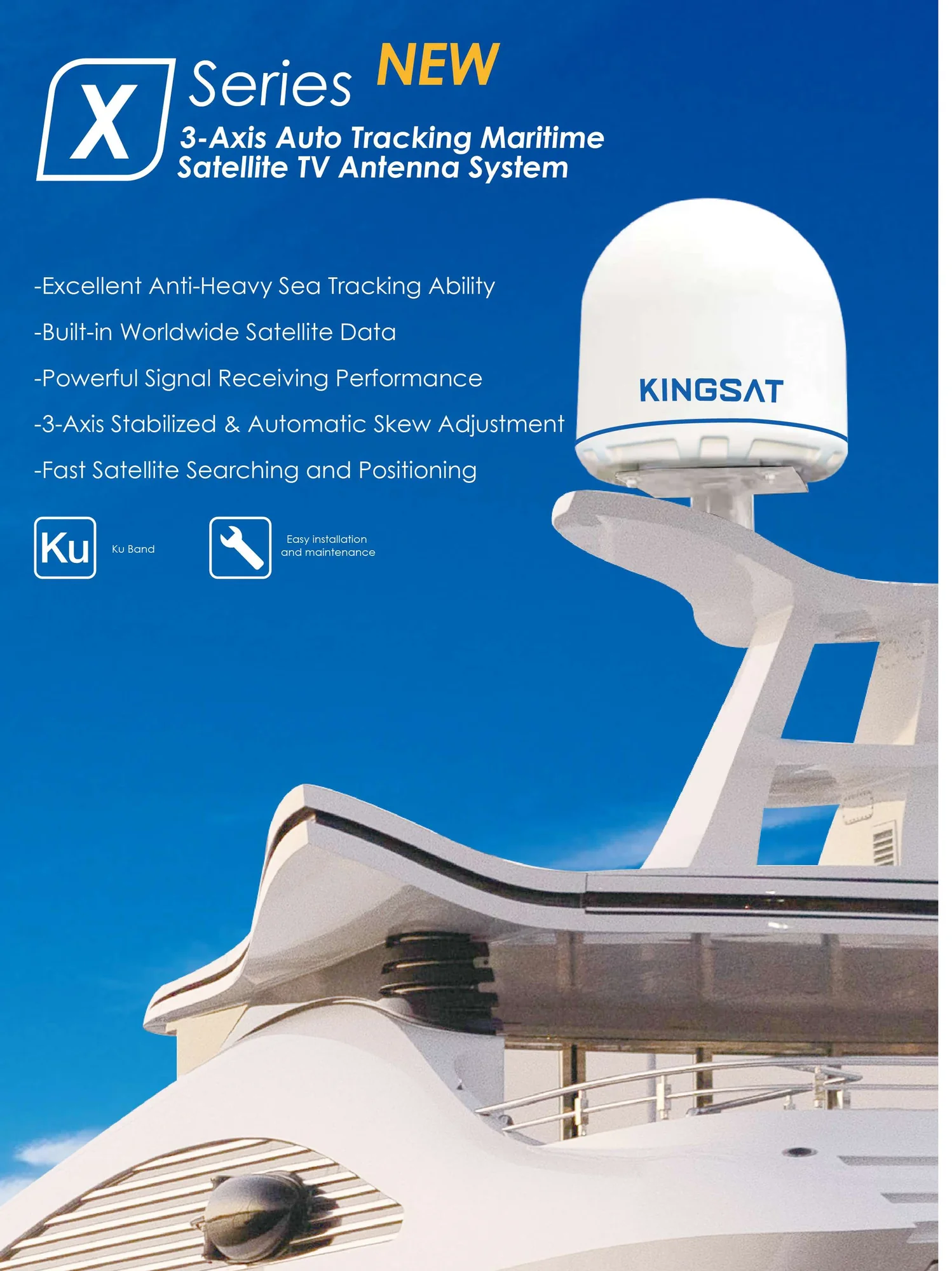
The X Series adds a third stabilization axis plus automatic skew, which is what separates it from the V Series. On a long ocean passage — where the vessel rolls deeply and yaws slowly, and where the look angle to the satellite changes with latitude — a 3-axis platform keeps the dish geometry correct instead of trading elevation for azimuth error.
Three models are available: X6 with a 64 cm radome, X8 at 85 cm and X10 at 105 cm. Weight runs from 37 kg to 125 kg, and the minimum EIRP requirement drops from 46 dBW to 43 dBW to 41 dBW as aperture grows. That progression is the reason a 105 cm X10 can hold a Ku-band TVRO lock on footprints where a small coastal antenna cannot.
The X Series is specified for Ku band 10.7–12.75 GHz with linear or circular polarization, elevation −5° to 115° and azimuth 0°–690°. The negative elevation range matters on smaller vessels where the antenna sits low and the satellite can appear near the horizon; the cross-level range of ±35° covers the heel angles seen on sailing and expedition vessels.
Model ladder
Choosing between the 3 models
X6
- Radome
- 64 cm
- Weight
- 37 kg
- Min. EIRP
- 46 dBW
Works down to a 46 dBW footprint
X8
- Radome
- 85 cm
- Weight
- 80 kg
- Min. EIRP
- 43 dBW
Works down to a 43 dBW footprint
X10
- Radome
- 105 cm
- Weight
- 125 kg
- Min. EIRP
- 41 dBW
Lowest EIRP requirement in the range — 41 dBW
Full specification
X Series data sheet
| Specification | X6 | X8 | X10 |
|---|---|---|---|
| Dish (radome) diameter | 64 cm | 85 cm | 105 cm |
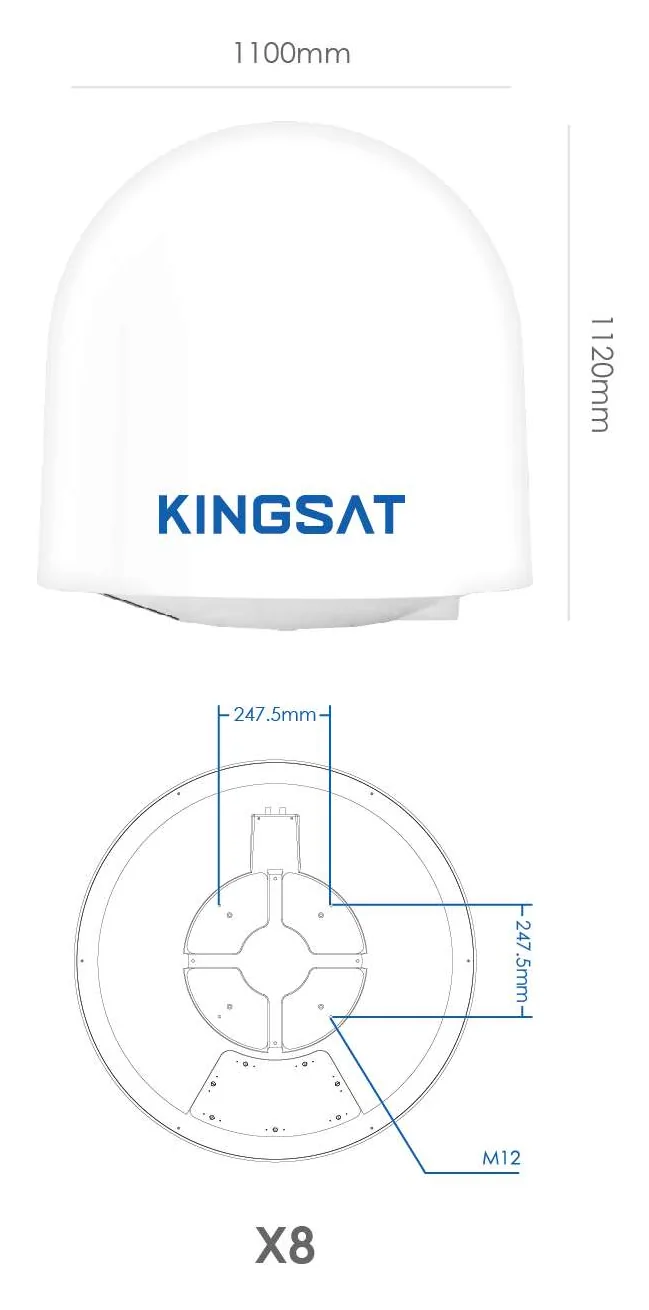
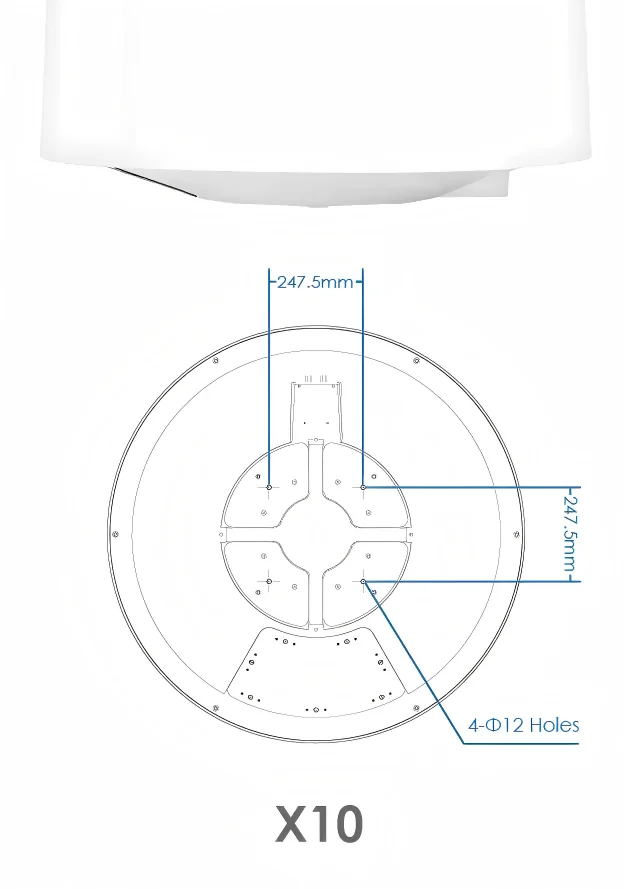
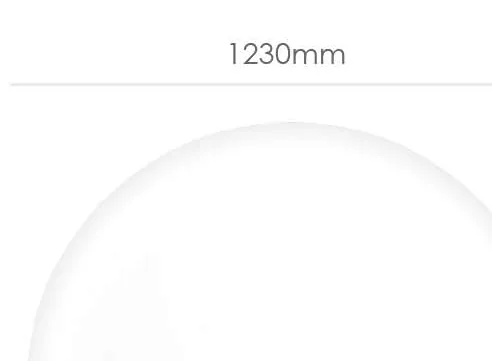
| Overall dimension | 78 × 80 cm | 110 × 112 cm | 123 × 137 cm |
| Weight | 37 kg | 80 kg | 125 kg |
| Frequency band | Ku 10.7–12.75 GHz | Ku 10.7–12.75 GHz | Ku 10.7–12.75 GHz |
| Minimum EIRP | 46 dBW | 43 dBW | 41 dBW |
| Stabilization | 3-axis stabilized + auto skew | 3-axis stabilized + auto skew | 3-axis stabilized + auto skew |
| Polarization | Linear or circular | Linear or circular | Linear or circular |
| Elevation range | −5° to 115° | −5° to 115° | −5° to 115° |
| Azimuth range | 0°–690° | 0°–690° | 0°–690° |
| Cross-level range | ±35° | ±35° | ±35° |
| Ship motion | Roll ±25°, pitch ±15°, yaw ±8° @ 6 s period (all models) | ||
| Tracking rate | > 90°/s | > 90°/s | > 90°/s |
| Temperature | −30 °C to 70 °C | −30 °C to 70 °C | −30 °C to 70 °C |
| Humidity | 0–95% | 0–95% | 0–95% |
TVROVSAT catalogue, page 2. Values reproduced from the X Series specification sheet; the “—” mark repeats the X6 value where the three models are identical.
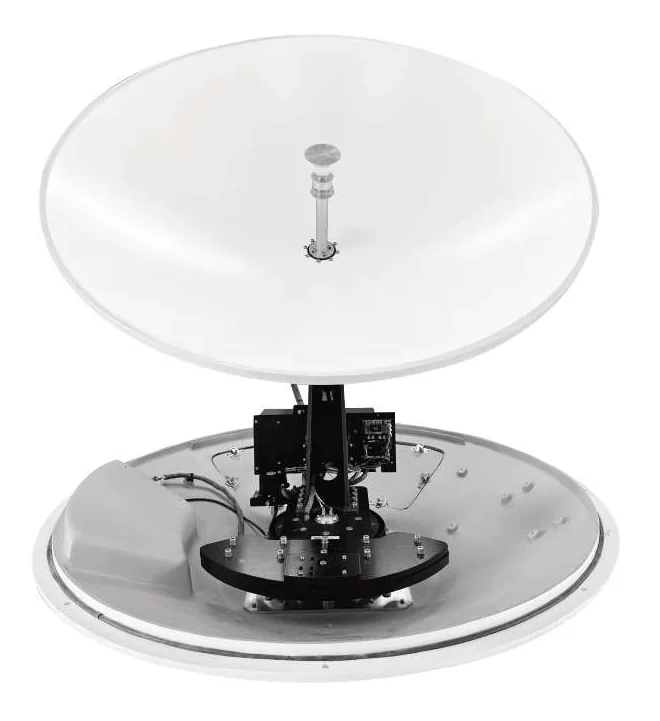
Drawings and detail
Mounting envelope
Buyer questions
X Series
The four questions that come up most often on this platform. Anything else — write to sales@tvrovsatantenna.com.
When do I need 3-axis instead of 2-axis?
When the vessel makes long ocean passages or has a pronounced heel. A 3-axis platform (plus auto skew) holds the polarization and look angle through continuous roll and yaw, which is where a 2-axis mount starts losing lock on the weaker footprints.
What does minimum EIRP actually mean for me?
It is the weakest satellite signal the antenna can work with. X6 needs 46 dBW, X8 needs 43 dBW and X10 needs 41 dBW. If your target satellite covers your route at 42 dBW, only the X8 or X10 will hold it reliably.
Is there a Ka-band X Series?
The X Series specification sheet lists Ku band 10.7–12.75 GHz with linear or circular polarization. Ask for the current Ka-band option before specifying a Ka footprint.
How heavy is the largest model?
The X10 weighs 125 kg and measures 123 × 137 cm, so it needs a properly reinforced mast or hardtop with a load path to the hull — plan the mounting with your naval architect.
Selection guide
2-axis vs 3-axis: which mount fits the hull?
Also in the range