V Series 2-Axis Maritime Satellite TV Antenna
Compact 2-axis TVRO antennas for coastal, regional and short-sea routes.
- 2-axis stabilized platform with automatic skew
- Tracking rate > 90°/s — designed for fast yaw changes in a seaway
- Ku band 10.7–12.75 GHz; optional Ka dual band 18.2–19.2 / 19.2–20.2 GHz
- Elevation 0–90°, azimuth 0–690° continuous coverage
- Operating temperature −30 °C to 70 °C, humidity 0–95%
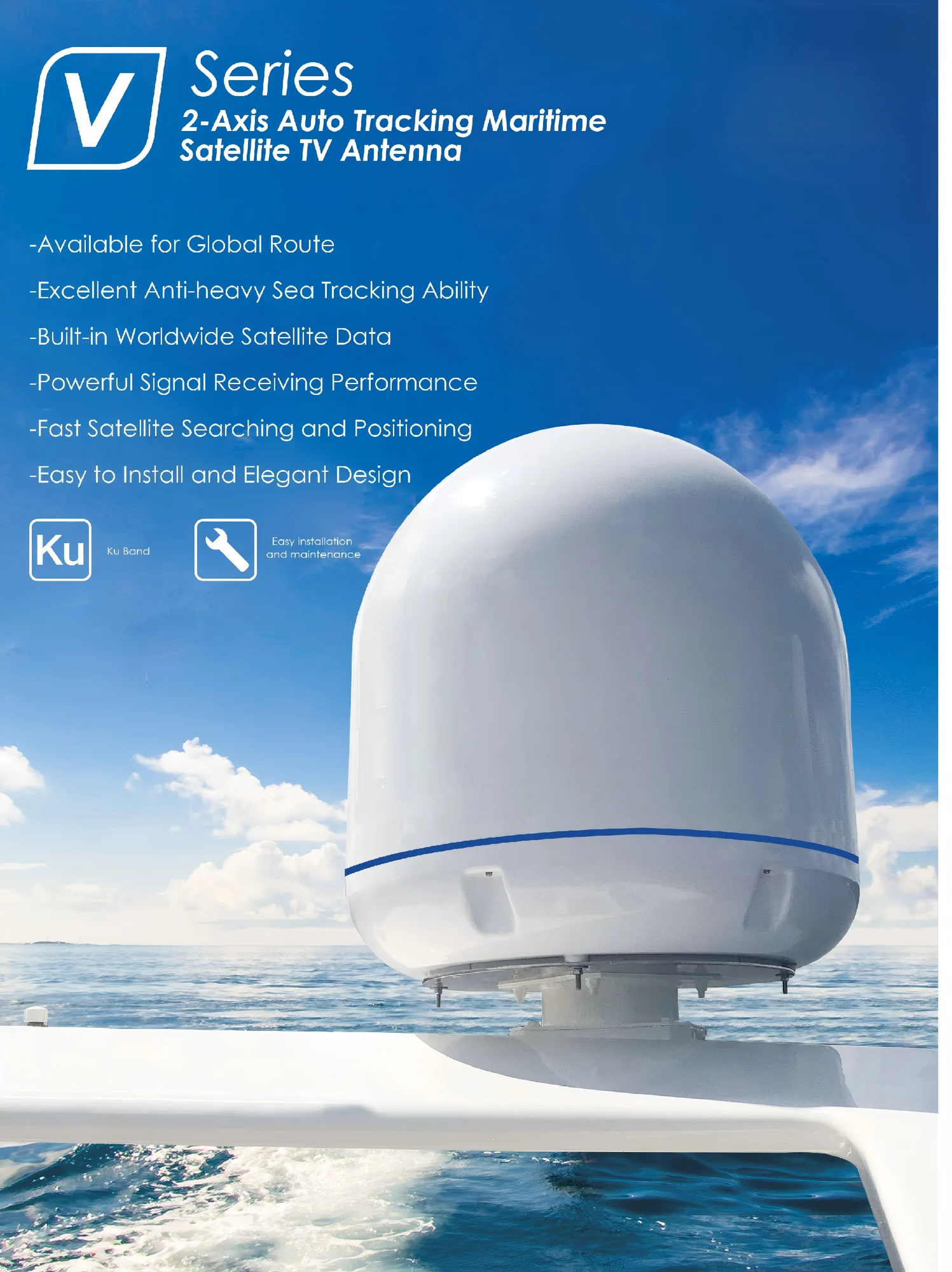
The V Series is a family of four small-aperture maritime satellite TV antennas — V3, V4, V6 and V7 — built on a 2-axis stabilized platform with automatic skew. The platform keeps the dish pointed at the satellite while the vessel rolls, pitches and yaws, so the TVRO receiver downstream sees a steady signal instead of a stream of drop-outs.
Because the radomes are small (33 cm to 75 cm) and the units are light (5 kg to 32 kg), the V Series is usually the practical choice for workboats, fishing vessels, pilot boats, tugs, coastal ferries and yachts where deck space and mast loading are tight. Ku band 10.7–12.75 GHz is listed for all four models, and the same feed is specified as Ka dual band covering 18.2–19.2 GHz and 19.2–20.2 GHz.
All four models share the same electronics and the same ship-motion envelope — roll ±25°, pitch ±15°, yaw ±8° at a 6-second period — with a tracking rate above 90°/s. What changes across the family is aperture, weight and gain: a bigger dish buys you a lower minimum EIRP, which is what lets the antenna hold a lock on weaker footprints.
Model ladder
Choosing between the 4 models
V3
- Radome
- 33 cm
- Weight
- 5 kg
- Min. EIRP
- 50 dBW
Needs a footprint of 50 dBW or better — the smallest aperture in the family
V4
- Radome
- 45 cm
- Weight
- 12 kg
- Min. EIRP
- 48 dBW
Works down to a 48 dBW footprint
V6
- Radome
- 60 cm
- Weight
- 20 kg
- Min. EIRP
- 46 / 47 dBW
Works down to a 46–47 dBW footprint
V7
- Radome
- 75 cm
- Weight
- 32 kg
- Min. EIRP
- 44 dBW
Lowest EIRP requirement in the family — 44 dBW
Full specification
V Series data sheet
| Specification | V3 | V4 | V6 | V7 |
|---|---|---|---|---|
| Dish (radome) diameter | 33 cm | 45 cm | 60 cm | 75 cm |
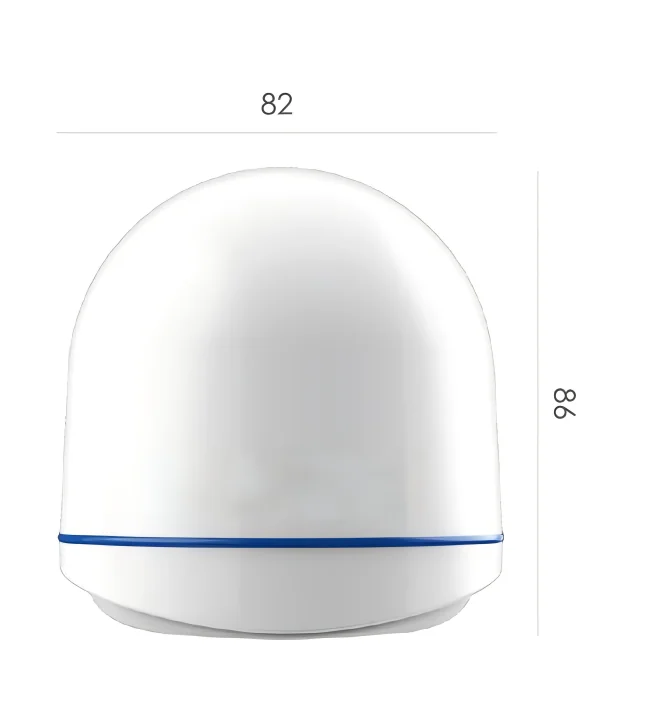
| Overall dimension | 41 × 42 cm | 54 × 56.5 cm | 73 × 76 cm | 82 × 86 cm |
| Weight | 5 kg | 12 kg | 20 kg | 32 kg |
| Frequency band | Ku 10.7–12.75 GHz / Ka dual band 18.2–19.2 GHz, 19.2–20.2 GHz (all models) | |||
| Minimum EIRP | 50 dBW | 48 dBW | 46 / 47 dBW | 44 dBW |
| Stabilization | 2-axis stabilized + auto skew (all models) | |||
| Polarization | Linear or circular (Ka) (all models) | |||
| Elevation range | 0°–90° (all models) | |||
| Azimuth range | 0°–690° (all models) | |||
| Ship motion | Roll ±25°, pitch ±15°, yaw ±8° @ 6 s period (all models) | |||
| Tracking rate | > 90°/s (all models) | |||
| Temperature | −30 °C to 70 °C (all models) | |||
| Humidity | 0–95% (all models) | |||
TVROVSAT catalogue, page 1. Rows marked “—” apply to every model in the series; only dish, dimension, weight and minimum EIRP differ between V3, V4, V6 and V7.
Drawings and detail
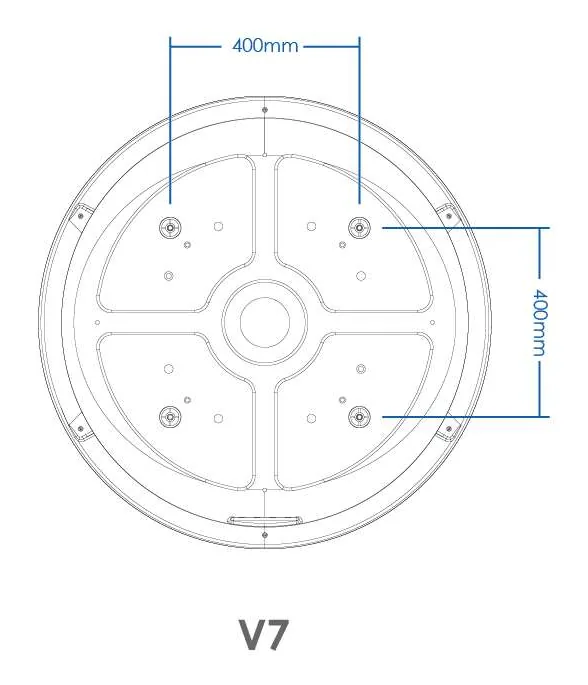
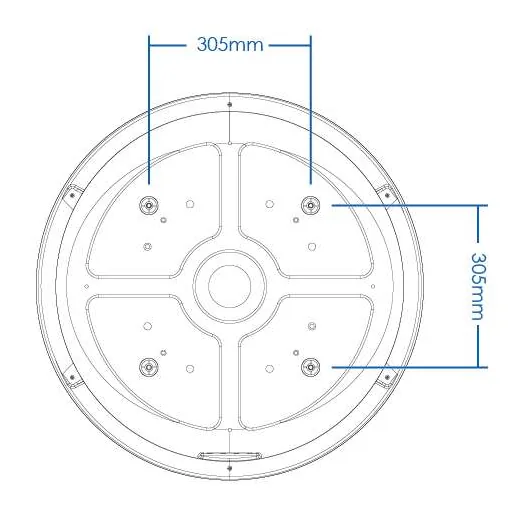
Mounting envelope
Buyer questions
V Series
The four questions that come up most often on this platform. Anything else — write to sales@tvrovsatantenna.com.
What is the difference between the V3, V4, V6 and V7?
Aperture. The V3 uses a 33 cm radome and weighs 5 kg; the V7 uses 75 cm and weighs 32 kg. Bigger aperture gives a lower minimum EIRP requirement — 50 dBW on V3 down to 44 dBW on V7 — which is what lets the antenna hold lock on a weaker footprint.
Does the V Series support Ka band?
The V Series is specified as Ku band 10.7–12.75 GHz, with an optional Ka dual-band feed covering 18.2–19.2 GHz and 19.2–20.2 GHz. Confirm the band mix for your footprint when ordering.
How much ship motion can it follow?
Roll ±25°, pitch ±15° and yaw ±8° at a 6-second period, with a tracking rate above 90°/s. That envelope covers typical workboat and coastal ferry motion.
Can I install it myself?
The catalogue documents the base-plate drilling pattern for deck mounting, and satellite parameters are set through the ACU. Confirm the cable schedule and the mounting footprint against your deck plan before ordering.
Selection guide
2-axis vs 3-axis: which mount fits the hull?
Also in the range