Marine VSAT Terminal — Stabilized on the Move
One stabilized terminal for broadband, voice, video and remote support on ocean passages.
- Stabilized-on-the-move antenna for service while underway
- Ka, Ku and C band service options
- Internet, voice, video and information services
- Remote assistance and remote commissioning / diagnostics
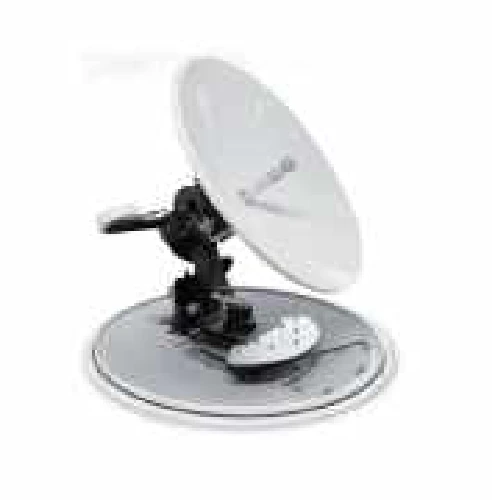
Beyond the reach of shore networks, satellite is the only link that follows the vessel. The stabilized-on-the-move antenna keeps the terminal pointed at the satellite while the ship rolls, pitches and changes heading, so the service does not drop every time the bow swings.
The documented service set covers what a working vessel actually needs from a link: internet access, voice, video, information services, remote assistance and remote commissioning or diagnostics — the last two being what let an office fix a configuration problem without flying an engineer out.
Service is offered on Ka, Ku and C band depending on the satellite operator and the route, and the manufacturer positions it for any type and size of vessel rather than a single hull class.
Full specification
VSAT terminal data sheet
| Item | Detail |
|---|---|
| Terminal type | Stabilized-on-the-move (VSAT) antenna terminal |
| Service bands | Ka / Ku / C band, per satellite operator and route |
| Services | Internet access, voice, video, information services |
| Remote support | Remote assistance, remote commissioning and diagnostics |
| Vessel scope | Any type and size of vessel |
| Coverage | Global, within the chosen satellite footprint |
The catalogue describes the system and its service set; it does not publish a specific antenna model, dish size or modem for this entry. Ask for the datasheet of the band you intend to use.
Buyer questions
VSAT terminal
The three questions that come up most often on this platform. Anything else — write to sales@tvrovsatantenna.com.
How does this differ from the TVRO antenna?
TVRO is receive-only television: one dish, one satellite, no recurring data cost. A VSAT terminal is two-way data — internet, voice and video — and carries an airtime contract. A vessel that needs both usually carries both.
Which band should a ship take?
Ka generally buys the most capacity per euro but is rain-fade sensitive and footprint-specific; Ku is the widest choice for mixed routes; C band holds up better in heavy rain and low-elevation tropical passes. The decision follows the route, not the hardware.
Can it back up the 4G/5G antenna?
Yes — the documented configuration pairs the shore cellular antenna with VSAT and switches priority automatically, using the cheaper shore link inside coverage and falling back to satellite outside it.
Selection guide
4G/5G, VSAT or microwave: three links, three ranges
Also in the range